
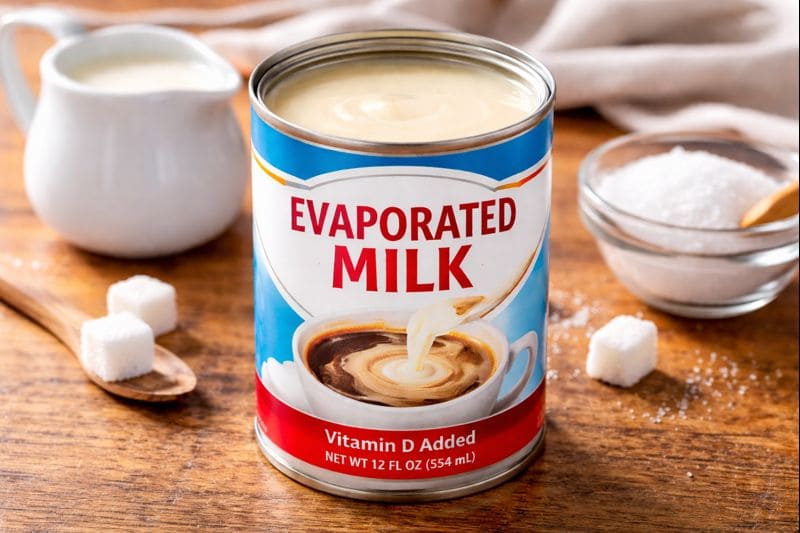
Evaporated milk is one of those pantry ingredients that quietly does a lot of work. It adds creaminess without being as heavy as cream, thickens sauces without much effort, and brings a subtle richness to desserts. But if you’re out of a can—or you’re avoiding dairy—finding a good evaporated milk substitute is totally doable once you understand what evaporated milk actually provides. The best replacement depends on the recipe: some dishes need thickness, others need richness, and some need the gentle “canned milk” flavor that evaporated milk brings. In this guide from Other Than Milk, we’ll break down practical options for both dairy and dairy-free kitchens, clarify the difference between evaporated and condensed milk, and help you choose the right swap without ruining your dessert.
What Evaporated Milk Is (and Why Recipes Use It)
Evaporated milk is milk that has had a significant portion of its water removed. The result is a concentrated dairy ingredient that’s creamier than regular milk and more stable in cooking. It’s often used in custards, pumpkin pie fillings, creamy soups, sauces, and some coffee drinks.
Because it’s concentrated, an evaporated milk substitute should usually have:
- More body than regular milk
- Enough richness to round out flavor
- Heat stability for cooking and baking
That doesn’t mean your substitute has to be identical—just functional.
Quick Swaps: Dairy Options That Work Well
If you use dairy, the simplest alternative evaporated milk is to make your own “evaporated” version by gently simmering milk to reduce it. This concentrates flavor and thickens texture. It takes attention, but it’s straightforward and works well for baking.
Another option is using half and half in place of evaporated milk for many recipes. It’s not the same as concentrated milk, but it often delivers the richness and texture people want, especially in custards and creamy fillings.
If you’re using heavy cream, you’ll usually want to dilute it with milk or water so it doesn’t overwhelm the recipe. Evaporated milk is concentrated milk—not straight cream—so matching thickness without making the dish too heavy is the goal.
Dairy-Free Choices: Creaminess Without the Can
For dairy-free cooking, a canned milk substitute depends on the recipe and how thick you need the result. A good approach is to start with a thicker plant milk and concentrate it slightly if needed. Oat-based and soy-based options often work well because they have a creamy mouthfeel and behave predictably in heat.
For baking, you want a neutral flavor and stable texture. Unsweetened plant milks are typically the safest choice, because sweetened or vanilla varieties can throw off savory recipes and even some desserts.
If you need extra body, you can:
- Reduce plant milk gently to concentrate it
- Use a thicker “barista” style plant milk
- Add a small amount of starch slurry if the recipe allows it
These methods help mimic the way evaporated milk thickens and smooths a mixture.
Evaporated Milk vs Condensed Milk: Don’t Swap Them Blindly
A common kitchen mistake is confusing evaporated milk with sweetened condensed milk. Evaporated milk is unsweetened; condensed milk is sweet and syrupy. That’s why many people search for a substitute for condensed milk or a condensed milk sub when they actually mean evaporated milk—or vice versa.
If your recipe calls for condensed milk and you only have evaporated milk, you can’t swap 1:1. You’d need to add sugar and potentially reduce it to get the same sweetness and thickness. In the other direction, using condensed milk in place of evaporated milk will usually make the dish much too sweet.
So before choosing a substitute, confirm which one your recipe wants:
- Evaporated milk: concentrated, unsweetened
- Condensed milk: concentrated, sweetened
If you truly need a substitute for condensed milk, your solution must include sweetness—not just creaminess. That’s also why “condensed milk sub” solutions often involve adding sugar and reducing.
Best Uses: Picking the Right Substitute by Recipe Type
Here’s an easy way to decide:
For custards and pies:
Choose a thick, neutral substitute. Reduced milk (dairy or plant-based) works well.
For creamy soups and sauces:
Use a creamy plant milk or diluted cream and simmer gently for stability.
For coffee and drinks:
Barista-style oat or a slightly richer plant milk can mimic the smoothness.
For desserts that require condensed milk:
Use a sweetened mixture designed to match both thickness and sugar.
In every case, think: is the recipe relying on evaporated milk for thickness, richness, or both?
Conclusion
An evaporated milk substitute is easiest when you match the function, not just the ingredient name. For dairy kitchens, reducing milk or using a richer blend can create a solid alternative evaporated milk option. For dairy-free kitchens, a canned milk substitute often comes from thicker plant milks, gentle reduction, or smart thickening—especially when you choose neutral, unsweetened cartons. And always double-check whether you actually need evaporated milk or a substitute for condensed milk, since condensed milk sub solutions must include sweetness. With a little intention—and a few reliable plant based milk alternatives in your rotation—you can keep your recipes creamy, smooth, and satisfying without depending on a can.