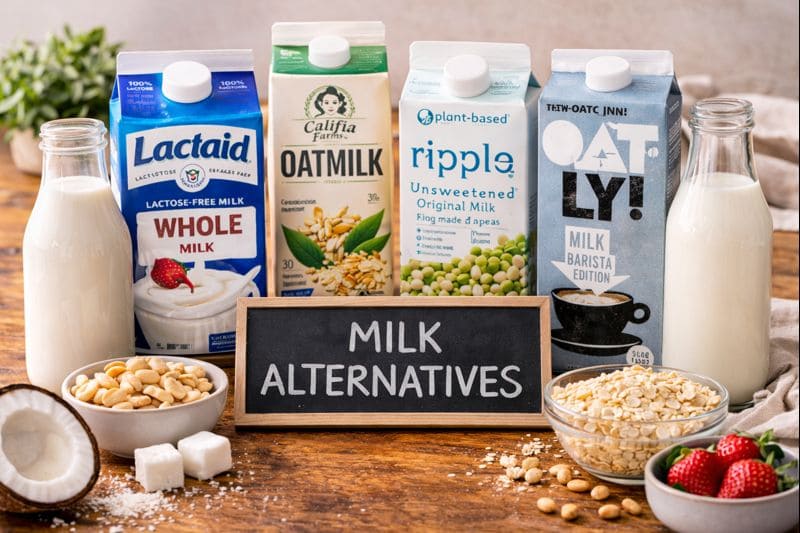
Milk doesn’t have to mean dairy. Whether you’re lactose sensitive, cooking for someone with allergies, or simply exploring new flavors, today’s options make it easy to pour, bake, and blend without traditional cow’s milk. From creamy oat blends to nutty almond options and protein-rich soy, there are more plant based milk alternatives than ever—and each one behaves a little differently in coffee, cereal, and recipes. At Other Than Milk, we focus on finding the best match for your needs: taste, texture, nutrition, and how it performs in the kitchen. If you’ve ever wondered which dairy free milk works best for lattes, or what to use as an evaporated milk substitute in a dessert, this guide will help you choose confidently.
Everyday Dairy-Free Favorites for Drinking and Cereal
For a neutral, versatile option, unsweetened oat milk is a go-to. It tends to be mild, slightly creamy, and easy to enjoy plain. Many people love brands like oatly oat milk for its smooth texture, especially in coffee or over granola. If you want higher protein and a classic “milk-like” body, unsweetened soy milk is a strong choice that can hold up well in smoothies and baking.
Almond milk is another popular staple, and silk almond milk is often chosen for its light taste and wide availability. Keep in mind that almond milk is usually thinner than oat or soy, which can be perfect for sipping but less ideal when you need richness. For something different, hemp milk offers a subtly earthy flavor and a naturally creamy feel that works nicely in smoothies and savory sauces.
Cooking and Baking: Creamy Substitutes That Actually Work
When you’re cooking, the goal is often richness. If you’re replacing dairy in soups, curries, or desserts, a coconut milk substitute may be needed when you want creaminess without coconut flavor—or when coconut doesn’t fit the recipe. In those cases, thicker oat milks or blended cashew-style drinks can mimic that body more closely.
For recipes that call for cream, you’ll often need a more targeted swap. A substitute for heavy cream can be made by using a thicker dairy free milk combined with a bit of fat (like a neutral oil) or by choosing a “barista” style oat milk designed for foam and creaminess. For coffee and sauces, a half and half cream substitute can be as simple as mixing a richer plant milk with a lighter one until you get the texture you want.
If a recipe calls for canned dairy, look for an evaporated milk substitute that can handle heat and reduce smoothly. Some people simmer a plant milk gently to concentrate it, while others use thicker options like oat or soy with careful stirring. The best results come from matching the recipe’s purpose: sweetness, thickness, or browning. For example, soy tends to perform well in baked goods because it behaves more like dairy in structure, while oat is excellent for creamy mouthfeel.
Lactose-Free Milks: When You Want Dairy Without the Discomfort
Not everyone wants to avoid dairy completely. Lactose free milks are real dairy products treated with lactase, making them easier to digest while keeping the flavor and nutrition of traditional milk. These can be especially helpful if you love dairy taste but need a gentler option for cereal, coffee, or cooking. They can also be a practical choice in recipes where plant milks might alter flavor or texture.
Conclusion
Choosing a milk alternative is less about finding “the best” and more about finding the best fit. Unsweetened oat milk and unsweetened soy milk are reliable everyday staples, while hemp milk and silk almond milk add variety in flavor and texture. For cooking, focus on function—whether you need a coconut milk substitute, a half and half cream substitute, a substitute for heavy cream, or an evaporated milk substitute for baking. And if your goal is comfort without giving up dairy, lactose free milks can bridge the gap. At Other Than Milk, we’re here to help you match the right pour to the right purpose—so every recipe still turns out delicious.